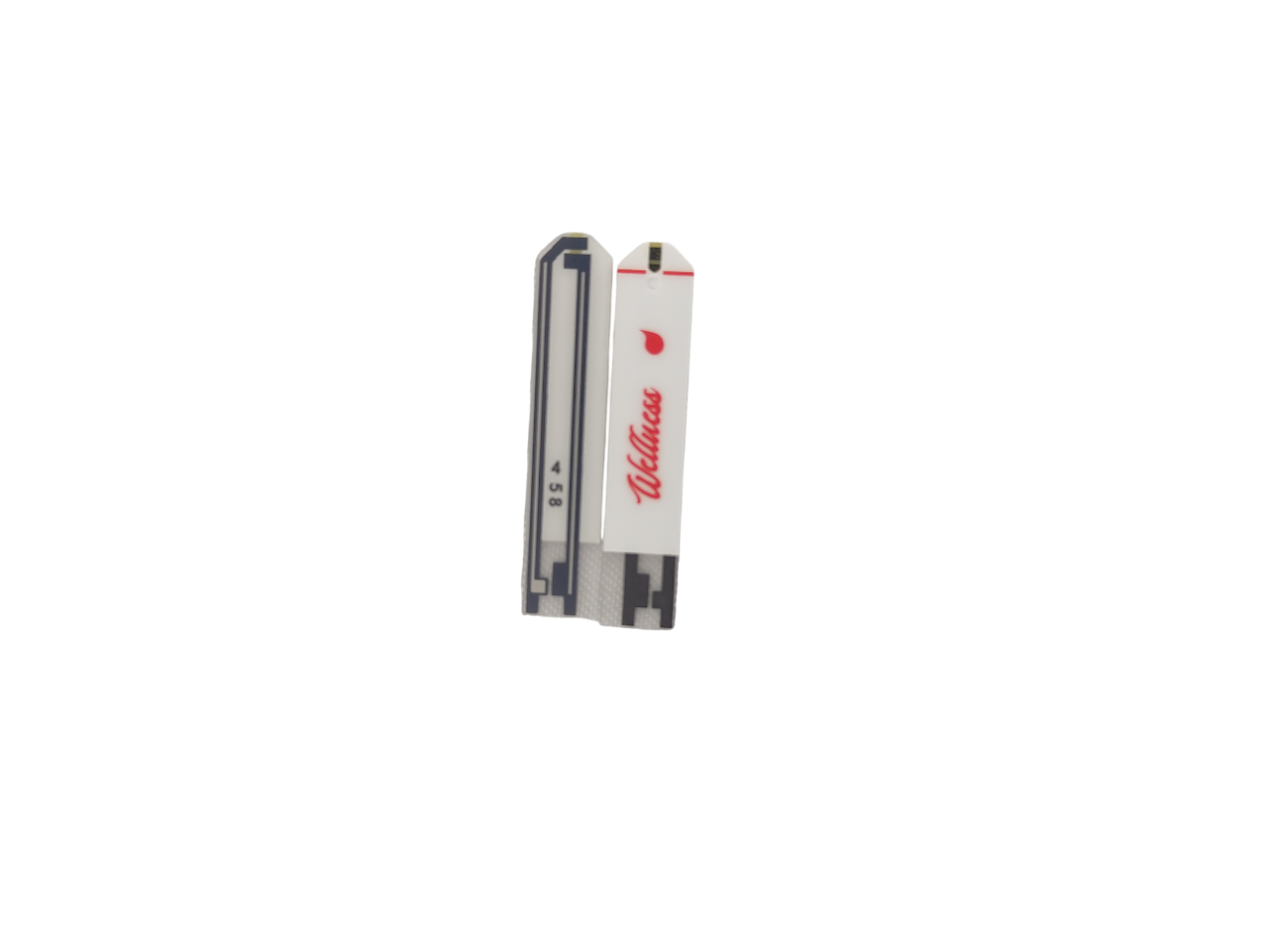
The BMB-EA127 test strips utilize GDH (Glucose Dehydrogenase) enzyme technology, specifically GDH-FAD (Flavin Adenine Dinucleotide), for the electrochemical measurement of blood glucose levels. This technology is a common and advanced method in modern blood glucose monitoring systems.
How it Works
| Reaction: |
The GDH enzyme, embedded in the test strip, catalyzes the oxidation of D-glucose in the blood sample to D-gluconolactone. |
| Cofactor Reduction: |
During this process, the FAD cofactor within the enzyme is reduced. |
| Electron Transfer: |
A chemical mediator (typically potassium ferricyanide) then accepts the electrons from the reduced FAD and carries them to an electrode in the meter. |
| Measurement: |
The meter measures the electrical current produced during the re-oxidation of the mediator at the electrode. The magnitude of this current is directly proportional to the glucose concentration in the blood sample. |
Advantages of GDH-FAD Technology
| Oxygen Independence: |
Unlike older Glucose Oxidase (GOx) systems, GDH-FAD does not rely on the partial pressure of oxygen in the blood, which can fluctuate with altitude or certain medical conditions, thus providing more consistent results regardless of oxygen variations. |
| High Specificity: |
GDH-FAD is highly specific to glucose. It does not typically react with other common sugars like maltose or galactose, which can cause falsely high readings in some other test strip types (specifically GDH-PQQ). |
| Wide Dynamic Range: |
GDH-FAD systems can often measure a wider range of glucose concentrations linearly compared to GOx, which can be useful for managing both very low and very high blood sugar levels. |
| Small Sample, Fast Results: |
This electrochemical biosensor technology enables the use of very small blood samples (0.3μL) and provides rapid results (5 seconds). |